This article explains how to review organic search visitors, search sources and
entry-content changes.
When to use
Use it to evaluate traffic scale, entry content and trend changes from organic
search visitors.
Steps
-
Open the Search Engine report and choose the time range to analyze.
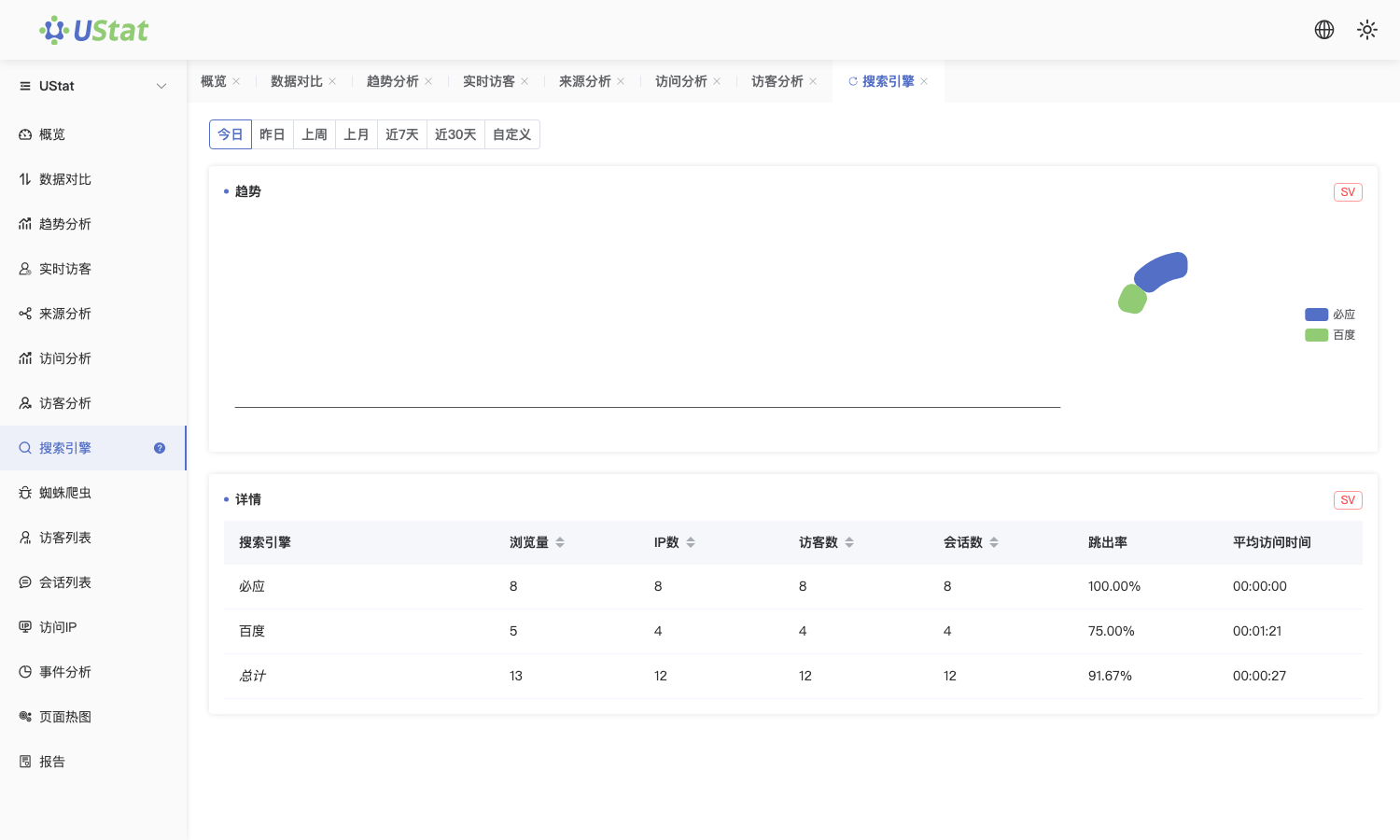
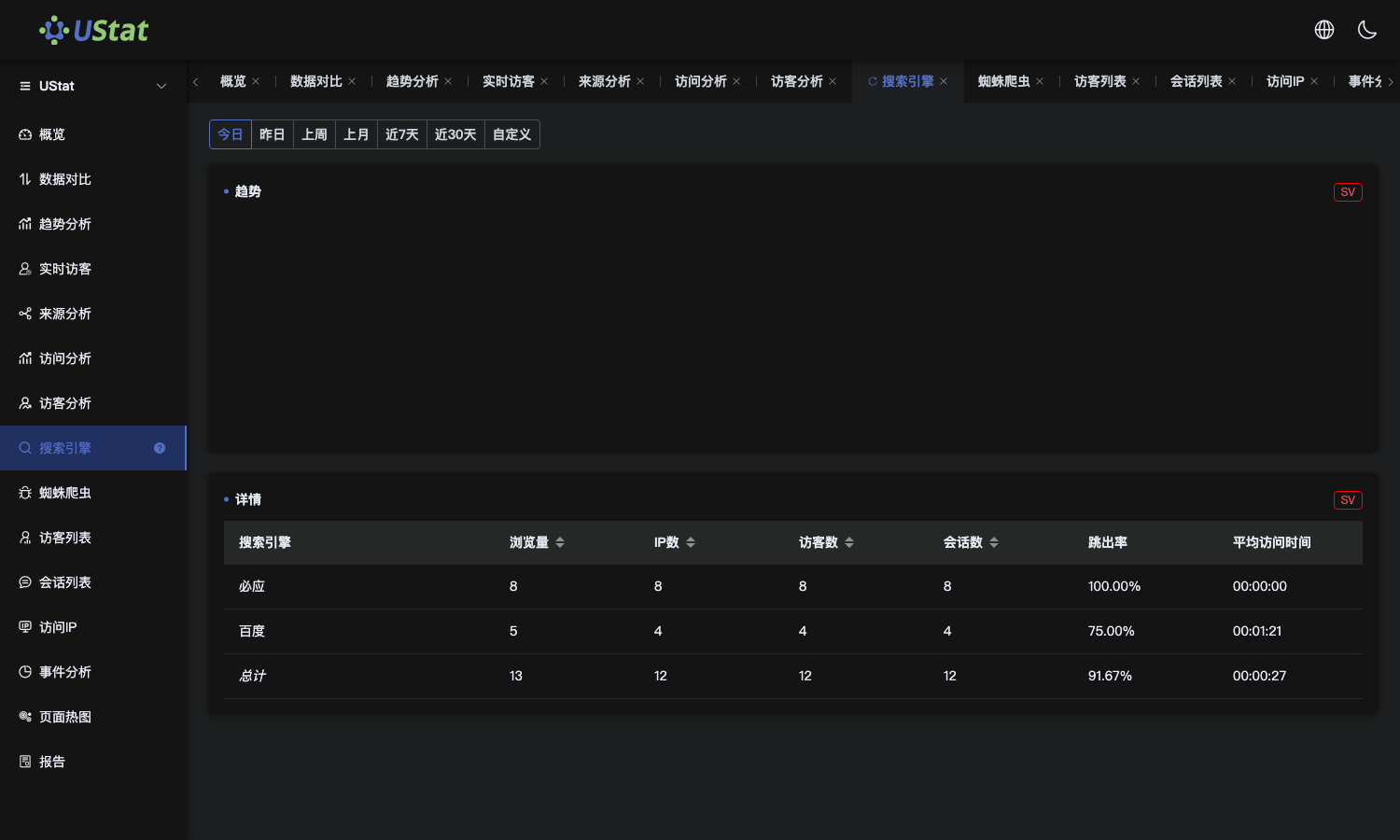 Interface example. Actual console display may vary.
-
Review PV, UV and trends from each search engine to judge whether
organic search contribution is stable.
-
Use entry pages to identify content opened by search users and
prioritize pages that keep receiving visits.
-
If organic search declines, compare content releases, SEO changes and
spider crawl records to investigate causes.
Notes
-
This article focuses on real visitor traffic and does not judge crawl
details.
-
When analyzing, also watch content updates and external ranking changes.
