in the complex IT architecture of multi-system cooperative operation, the compatibility and data interaction efficiency between different devices and systems often determine the stability of the overall business operation. Front-end machines, as a key node in the architecture, are being applied by more and more enterprises and institutions in industrial control, financial transactions, intelligent security and other fields. This article will deeply analyze the definition, operation principle and core role of front-end machines, help readers clarify the core value of such devices in the system architecture, and provide reference for related technology selection and architecture optimization.
to understand the value of the front-end machine, we first need to clarify its basic definition and application scenarios, so as to clearly position its role in the system architecture.
1, the basic definition of the front machine
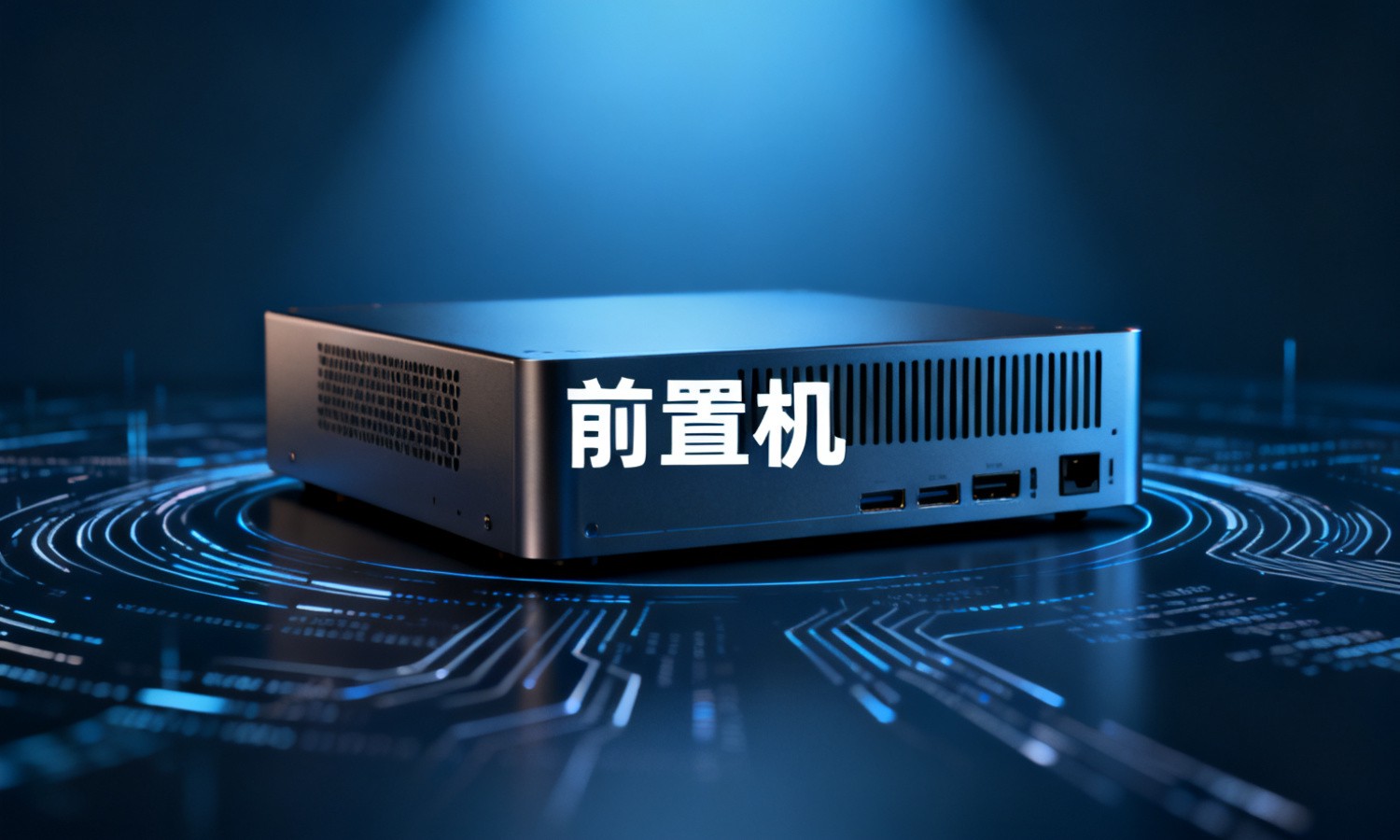
front-end machine is an intermediate node device deployed between the core business system, the front-end equipment, and the external system. It has multiple functions such as data forwarding, protocol conversion, and security protection. It is not an independent business processing unit, but acts as a "buffer belt" and "translator" of the core system to solve the compatibility problem between different systems and reduce the direct access pressure of the core system.
2, the typical application scenarios of the front machine
in the financial sector, the front-end machine is deployed between the bank's core transaction system and the ATM machine, POS end point, responsible for receiving the end point transaction request and forwarding it to the core system after completing the format conversion; in the industrial control scenario, the front-end machine is connected to the PLC device and the central monitoring platform to realize the conversion between different industrial protocols and ensure the stable upload of equipment data; in the field of smart security, the front-end machine is responsible for integrating the data of front-end devices such as cameras and access control, and the unified format is transmitted to the back-end management platform.
front-end machine can play a key role in the multi-system architecture stems from its unique operating logic, and the core revolves around data processing and protocol adaptation.
1, data reception and preliminary verification
front-end machine first receives the original data source from the front-end device or external system, and at the same time conducts preliminary verification of the integrity and format standardization of the data. Once the data is found to be missing, wrong format and other problems, the front-end machine directly returns an error prompt to avoid invalid data entering the core system occupying resources and reducing the processing burden of the core system from the source.
2, protocol conversion and format adaptation
this is the core running link of the front-end machine. Different front-end devices or systems often use different communication protocols, such as Modbus in the industrial field and ISO8583 in the financial field. The front-end machine has built-in multi-protocol parsing and conversion modules to convert the original data source into a unified format that can be recognized by the core system. At the same time, the return data of the core system is converted into a format compatible with the front-end device to achieve seamless communication across protocols.
3, data forwarding and status feedback
complete the protocol conversion and format adaptation, the front opportunity forwards the processed data to the core business system, and records the data transmission status in real time. When the core system returns the processing result, the front opportunity synchronously feeds back the result to the front-end equipment to ensure the closed loop of the entire data interaction process, and retains a complete interaction log to facilitate subsequent troubleshooting and auditing.
as an intermediate node in the system architecture, the role of the front-end machine is not single, but to improve the running quality of the entire system from multiple dimensions.
1, the core system security barrier
front-end machine can isolate the direct connection between the core business system and the external network. All external access requests must be filtered and verified by the front-end machine to effectively avoid malicious attacks directly touching the core system. At the same time, the front-end machine can also set access control, allowing only authorized devices and systems to initiate requests, further enhancing the security level of the core system.
2, system performance optimization scheduling node
face a large number of concurrent front-end requests, the front-end machine can realize queuing scheduling and load balancing of requests to avoid overload caused by the core system receiving excessive requests in a short time. At the same time, the front-end machine can also process some non-core requests locally, such as simple query requests, without forwarding to the core system, greatly reducing the operating pressure of the core system and improving the overall response efficiency.
3, multi-system collaboration compatibility bridge
in the architecture of multi-device and multi-system coexistence, protocol incompatibility is often the biggest obstacle to data interaction. The front-end machine breaks the communication barriers between different systems through the built-in multi-protocol conversion module, so that devices and systems using different protocols can interact smoothly without large-scale transformation of the core system or front-end equipment, reducing the cost and difficulty of system integration.
to give full play to the role of the front-end machine, the details of the selection and deployment are very important, which directly affects the subsequent operation effect.
1, according to the business scenario selection configuration
different scenarios have different performance requirements for front-end computers. Financial transaction scenarios require front-end computers to have extremely high concurrent processing capabilities and data transmission stability. Industrial control scenarios pay more attention to protocol compatibility and environmental adaptability. When selecting a model, you need to combine factors such as business concurrency, protocol type, and data security requirements to select the corresponding hardware configuration and software modules.
2, deployment location and network architecture adaptation
the deployment location of the front-end machine needs to take into account data transmission efficiency and security protection. It is usually deployed at the internal network boundary where the core system is located. It can not only quickly interact with the core system for data, but also effectively isolate the risk of external networks. At the same time, it is necessary to ensure that the front-end machine matches the internet bandwidth of the front-end equipment and the core system to avoid data transmission delays due to insufficient bandwidth.
To sum up, the front-end machine, as a key intermediate node in the system architecture, solves the compatibility and stability problems in multi-system collaboration through functions such as protocol conversion, data scheduling and security protection. From definition to operation principle, to core role and selection points, the value of the front-end machine runs through multiple levels of the system architecture. Reasonable application of the front-end machine can effectively improve the operation efficiency and security of the core system, and provide strong support for the stable operation of complex business scenarios.