
Which data analytics system is better? Comparison, evaluation and recommendation
Time: 2026-09-29
Editor: USTAT.COM
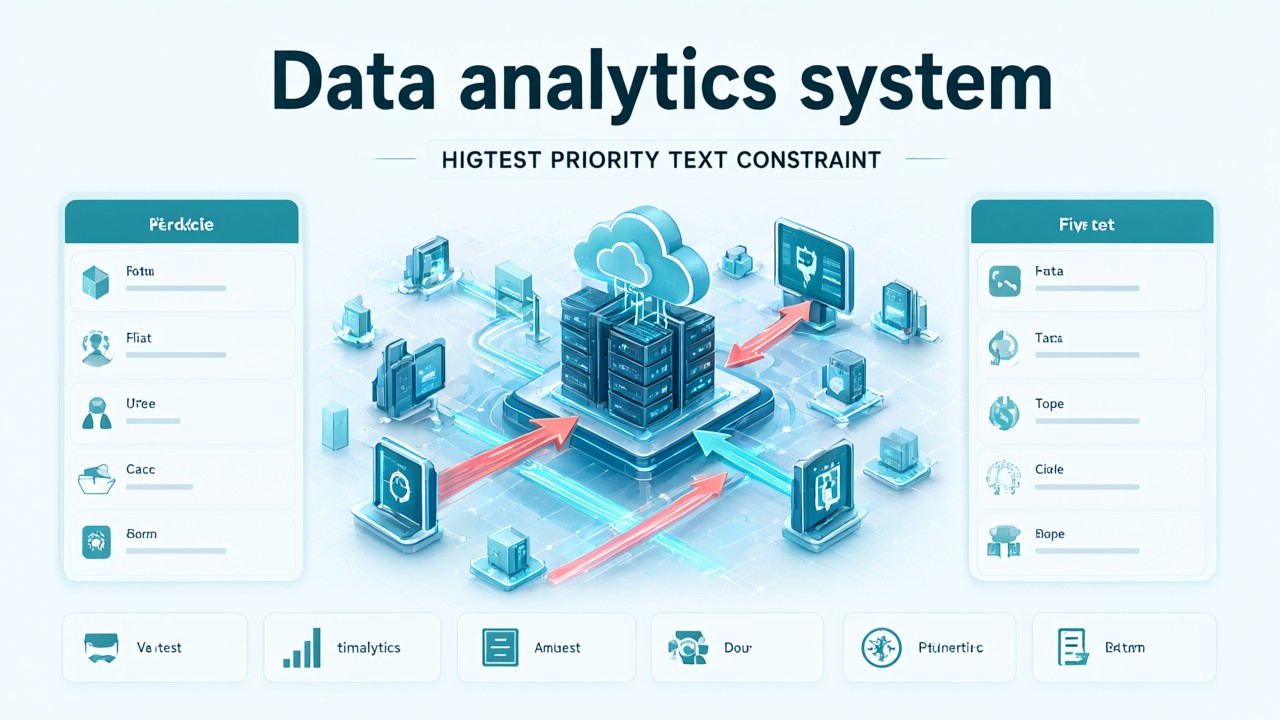
in today's accelerated digital transformation, enterprises are increasingly dependent on data, and how to extract insights with decision value from massive information has become the focus of attention in various industries. As a core bridge connecting original data sources and business intelligence, the selection of data analytics systems is directly related to the efficiency of enterprise operations and the accuracy of strategic judgments. However, the products on the market have different functions, from self-service BI to artificial intelligence-driven enhanced analysis, from local deployment to cloud subscription, it is not easy to choose a system that really suits your business scenario. This article will be from the functional coverage, ease of use, scalability and service support and other dimensions, the current mainstream of several types of data analytics system in-depth comparison, combined with the actual needs of different sizes of enterprises, to provide clear selection ideas and recommendations to help you find the most suitable solution in the complex market.
How to evaluate the core capabilities of the data analytics system?
evaluate whether a data analytics system is excellent, it is first necessary to clarify the composition of its core capabilities. Different products have significantly different focuses in data access, processing, visualization and intelligent analysis, which directly determines its application scenarios.
1, data connectivity and integration
good data analytics system should support seamless access to multiple data sources, including relational databases, NoSQL databases, API interfaces, and common file formats. At the same time, the strength of data cleaning and transformation functions determines whether the system can efficiently handle messy original data sources. Some high-end products also have built-in data governance modules that can automatically identify data quality issues.
2, visualization and interactive experience
intuitive chart display and flexible interactive operation are the key to attracting users of the data analytics system. From basic bar charts and line charts to complex geographic information maps and Sanji charts, the richness of the product's chart library is crucial. In addition, the drag-and-drop operation interface and the instant response of the screening linkage can significantly reduce the threshold for business personnel to use.
Differentiated comparative analysis of mainstream data analytics systems
current market, data analytics systems are mainly divided into three camps: traditional business intelligence tools, self-service analytics platforms, and cloud-native data services. They each have distinct advantages and disadvantages and are suitable for different types of enterprises.
1, the characteristics of traditional business intelligence tools
represented by established manufacturers, such systems usually have strong report production capabilities, support complex rights management and scheduling tasks. Its advantage is high stability, suitable for financial and government affairs fields with extremely strict data security requirements. But the disadvantages are also more obvious, the deployment cost is high, the learning curve is steep, and the mobile end support is often not friendly enough.
2, the rise of agile self-service analytics platforms
these products emphasize the ability of business people to explore independently, enabling interactive analysis with second-level response through in-memory computing and columnar storage technology. They usually provide a more user-friendly visual drag-and-drop experience, and have built-in intelligent data interpretation capabilities that can automatically detect anomalies and trends in the data. For Internet and retail enterprises that need to respond quickly to market changes, such data analytics systems are more attractive.
3, the advantages of cloud-native data analytics systems
relies on the underlying architecture of Cloud as a Service, these systems are naturally flexible and highly available. They are often deeply integrated with other services in the cloud ecosystem, such as data warehouses, machine learning platforms, etc., to support the full link process from data storage to analytical modeling. The pay-as-you-go model also reduces the initial investment cost for SMEs.
3. What are the key indicators that should be paid attention to when choosing a data analytics system?
clear their own needs, through several key indicators to screen specific products, can avoid falling into the misunderstanding of parameter comparison, faster lock the appropriate program.
1, Performance and Concurrent Processing
for enterprises with huge data volume, the response speed of the system under millions or even billions of data is the core consideration. It is necessary to pay attention to the optimization ability of its query engine and the stability under high concurrency access scenarios. It is recommended to verify through stress testing of actual business datasets.
2, deployment and scalability
need to choose the on-premises, private cloud or public cloud SaaS model according to the enterprise's IT architecture plan. At the same time, considering the future business growth, whether the system supports horizontal scaling, and whether it can easily access new data sources and algorithm models are all important evaluation points.
3, security and authority control mechanism
data analytics systems involve a large amount of sensitive business information, support for row-level permissions, column-level permissions, and desensitization policies is essential. In addition, full operational audit logs and compatibility with existing single sign-on systems are also key concerns for enterprise security teams.
Recommendation strategies of data analytics systems for enterprises of different sizes
there is no absolute "best", only the most suitable "match". According to the stage of the enterprise and the ability to invest resources, we can provide more targeted selection suggestions.
1, lightweight choice for SMEs
for small and medium-sized enterprises with limited budgets and a streamlined technical team, it is recommended to prioritize cloud-based SaaS-based data analytics systems. Such products usually offer free trial versions or pay-per-seat billing, without the need for up-front hardware investment. They have a wealth of built-in industry templates, which can quickly build core boards such as sales and operations to help managers quickly grasp the current situation of the business.
2, platform selection of large enterprises
large enterprises often need to build enterprise-level data mid-platform, they should choose data analytics systems that support multi-tenant architecture and have strong API interfaces. Such systems need to be able to deeply connect with existing core business systems such as ERP and CRM, and support data scientists to conduct complex modeling and analysis. At the same time, perfect secondary development capabilities and professional technical support teams are the keys to ensure the successful implementation of the project.
sum up, choosing the right data analytics system requires a comprehensive consideration of functionality, performance, cost and its own development stage. The core is to clarify business goals, so that tools serve the business, rather than chasing functional stacking. It is recommended that enterprises conduct multiple rounds of product demonstrations and proof-of-concepts before making decisions, and involve actual users in the evaluation to ensure that the final selected system can be truly integrated into the daily workflow, maximize the value of data assets, and help enterprises win in the fierce market competition.