
What does CDN return to the source mean? Detailed explanation of the principle and function of CDN return to the source
Time: 2026-09-29
Editor: USTAT.COM
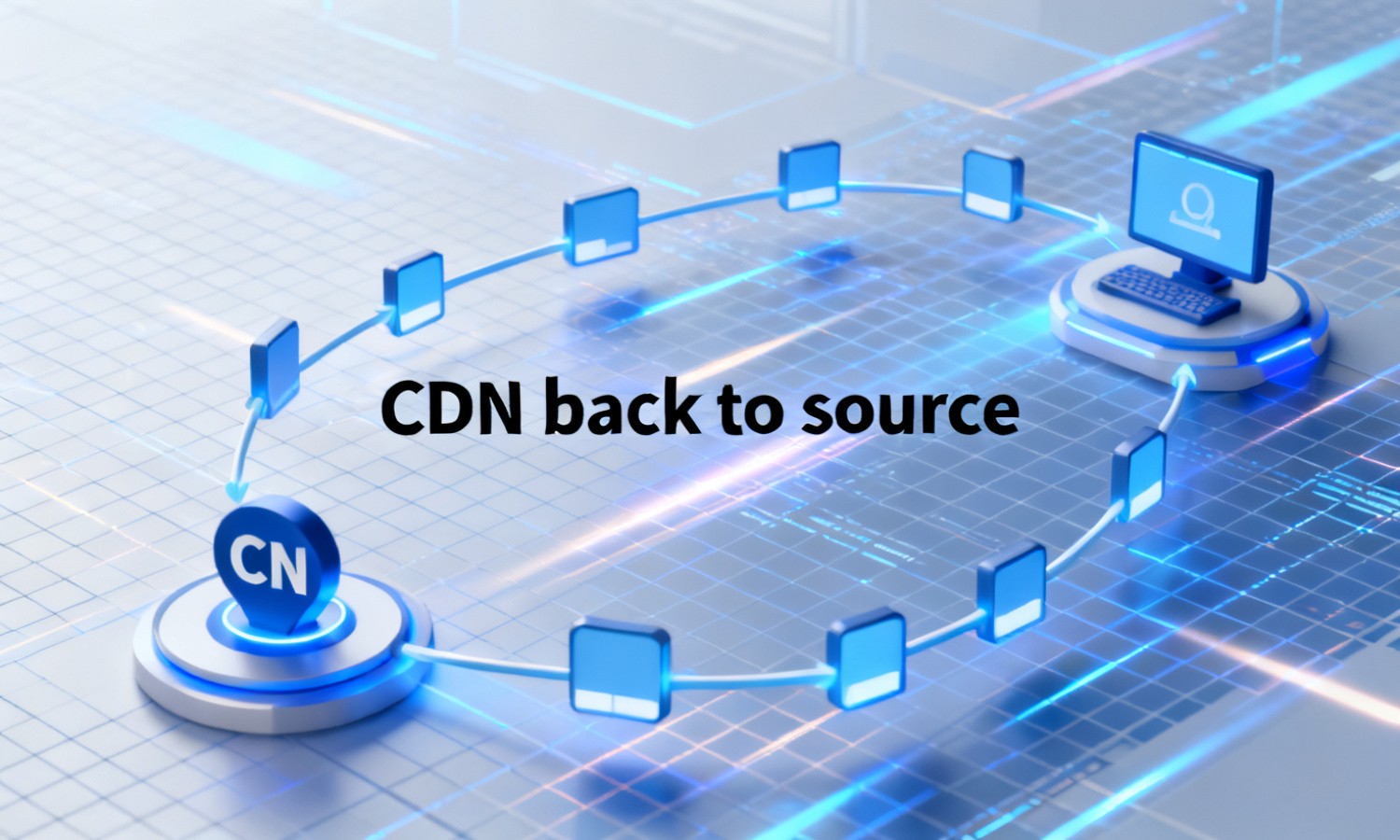
in the Internet information delivery system, CDN is the core architecture to ensure users' fast access, and CDN return to the source is a key link to support the normal operation of CDN. Many webmasters often encounter problems related to return to the source when configuring CDN, but they have little understanding of the logic behind it. This article will start from the basic concept, operating principle, and practical role of CDN return to the source to help you fully grasp this core technology point and provide theoretical support for optimizing the website access experience.
What is the basic definition of CDN return source?
to understand the CDN back to the source, we must first combine the overall operation logic of the CDN to disassemble, it is not an independent technology, but the core interaction link in the CDN system.
1, CDN back to the source of the core definition
CDN back to the source refers to when the content requested by the user does not exist on the CDN node, or has exceeded the valid period of the cache, the CDN node will initiate a request to the original server of the website, obtain the corresponding content resources, and then return the resources to the user, while The process of caching the resource to its own node. Simply put, CDN back to the source is the operation of the CDN node to "pick up the goods" from the source station.
2, CDN back to the source of the trigger scenario
common CDN back to the source trigger scenarios are mainly three categories: first, the content of the user request is accessed for the first time, the CDN node has not cached the resource; second, the cache resource on the CDN node has expired, need to re-obtain the latest version from the source station; third, the user initiates a forced refresh cache operation, the CDN node will actively pull the latest resources to the source station.
2, CDN back to the source of the operating principle is what?
The operation ofCDN back to the source is a standardized process, involving the coordination of multiple links, and each step directly affects the efficiency of back to the source and the user access experience.
1, CDN back to the source of the request forwarding logic
when a user initiates a content request, it will first be assigned to the CDN node closest to the scheduling system, and the node will first check whether the local cache has corresponding resources. If there is no resource that meets the requirements, the scheduling system will select the optimal return path according to the preset return policy and forward the request to the source station. Some CDN service providers will also set up a return standby node to avoid the failure of a single source station to return to the source.
2, CDN back to the source of the resource interaction process
After theCDN node initiates a return request to the source station, the source station will verify the identity of the request, confirm that it is a legitimate CDN node request, and return the corresponding resource to the CDN node. After the CDN node receives the resource, it will cache the resource into the local storage according to the preset caching rules, and return the resource to the user who initiated the request to complete a complete CDN return process.
What are the actual core functions of CDN return to the source?
many people mistakenly think that CDN return to the source is only a supporting operation of CDN, in fact, it has an irreplaceable core role in ensuring information delivery efficiency and source station stability.
1, to ensure the real-time and accuracy of the content
through the CDN return mechanism, CDN nodes can regularly obtain the latest content resources from the source station to avoid users accessing outdated cached content. For example, commodity prices, inventory information on e-commerce websites, or breaking information on news websites, all need to be returned to the source through CDN to ensure that users obtain the latest data and ensure the real-time and accuracy of the content.
2, effectively alleviate the access pressure of the source station
CDN return to the source is not triggered every time a user request is triggered, and it will only be initiated when the cache is invalid or there is no cache. A large number of repeated requests will be directly responded by the CDN node, and only a small number of return requests will reach the source station, which greatly reduces the concurrent visits of the source station, avoids the collapse of the source station due to traffic overload, and improves the stability of the source station.
3, optimize the overall information delivery efficiency
CDN back to the source, the optimal path and node will be selected. Some CDN service providers will also optimize the resources returned to the source, such as compression and format conversion, and then cache them into the node. When subsequent users request the resource, the CDN node can directly return the optimized resource to further improve the user's access speed and optimize the overall information delivery efficiency.
4. What are the common optimization strategies for CDN return to the source?
reasonably optimize the CDN return-to-source strategy, it can further reduce the return-to-source frequency, improve the operation efficiency of the CDN, and reduce the load pressure of the source station.
1, set a reasonable cache expiration time
this is the most basic strategy for optimizing CDN return to the source, webmasters can set different cache expiration times according to the update frequency of the content. For example, resources with low update frequency such as static pictures and CSS files can set a longer cache time to reduce the number of CDN return to the source; while dynamic content or frequently updated resources can set a shorter cache time to balance the real-time content and return to the source efficiency.
2, using intelligent return routing strategy
select a CDN service provider that supports intelligent return routing, the system of such service providers will monitor the network status of the return path in real time, and automatically select the lowest delay and most stable path to initiate a CDN return request to avoid timeout due to network congestion.
To sum up, CDN return to the source is the core link connecting nodes and source stations in the CDN system. From the basic definition, operation principle to the actual role, it directly affects the access experience and source station stability of the website. By reasonably configuring the CDN return strategy, it can not only ensure the real-time content, but also relieve the pressure of the source station, which is an indispensable key operation to optimize the performance of the website. Mastering the core logic of CDN return can help webmasters configure CDN more scientifically and provide users with a smoother access experience.