
What is a storage server? Explanation of core concepts and application scenarios
Time: 2026-09-29
Editor: USTAT.COM
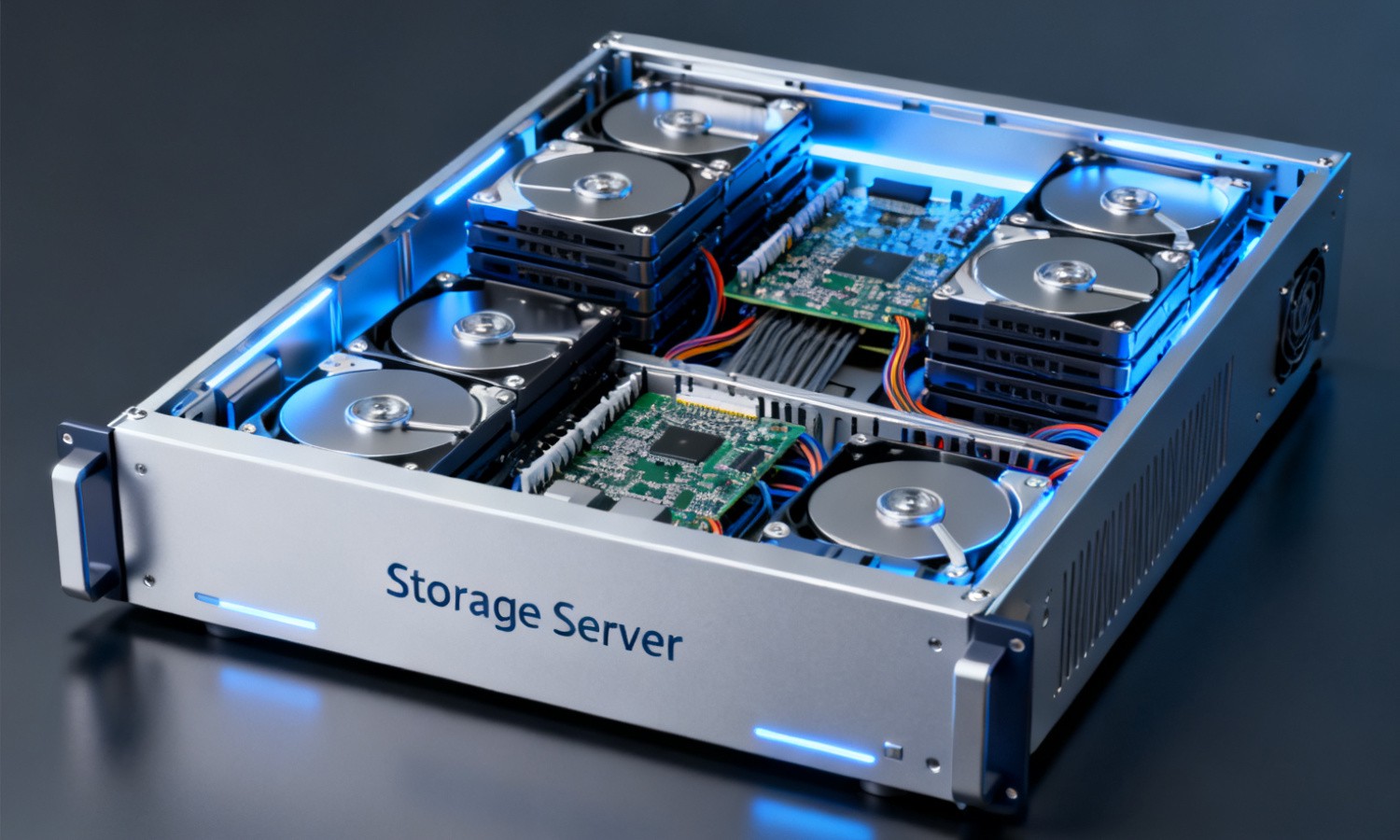
driven by the wave of digitalization, the amount of data in enterprises and institutions has exploded, and efficient and safe data storage and management has become one of the core requirements. As the core carrier in the data storage system, storage server undertakes key functions such as data storage, reading, and backup, and its performance and stability directly affect the normal operation of the business. This article will deeply disassemble the core concept of storage server, analyze its technical architecture, and introduce its application value in combination with actual scenarios, so as to build a complete cognitive framework for readers about storage server.
What is the core definition of storage server?
to understand the value of a storage server, it is first necessary to clarify its essential positioning and core functions, and distinguish it from ordinary servers.
1, the essential attributes of the storage server
storage server is a server device that specifically optimizes data storage, management and access capabilities. Unlike ordinary servers that focus on computing power, it preferentially allocates resources to storage controllers, hard disk arrays and data transmission channels, and can provide large-capacity, high-reliability data storage space.
2, the core functions of the storage server
In addition to the basic data storage function, the storage server also has advanced functions such as data redundancy backup, snapshot recovery, data encryption, and hierarchical storage, which can allocate data to storage media with different performance according to the importance and access frequency of the data.
What are the core technical architectures of storage servers?
The efficient operation of thestorage server relies on a sound technical architecture support, and these technical components together ensure the stability and efficiency of data storage.
1, Storage Media and Array Technology
storage server usually uses a combination of mechanical hard disks, solid state drives, or a combination of both storage media, and integrates multiple hard disks into one logical storage unit through RAID array technology.
2, Storage Controller and Network Architecture
storage controller is the core command center of the storage server, responsible for scheduling data read and write requests, managing storage quotas; and high-speed network architectures such as Fibre Channel and 10 Gigabit Ethernet ensure the data transmission efficiency between the storage server and other devices, Support long-distance, large-traffic data access and synchronization to meet the needs of multi-end point concurrent access.
What are the typical application scenarios of storage servers?
The value ofstorage server needs to be reflected in the actual business scenario, the business needs of different industries, and the configuration requirements of storage servers are also different.
1, enterprise data center scenarios
large enterprise data center needs to carry massive business data, user information and system logs, storage servers are usually deployed in a clustered manner in this scenario, providing PB-level storage space, and multi-node backup of data through distributed storage technology implementation, to ensure the stable operation of the business system 7 * 24 hours, even if a single storage server node failure, it will not affect the overall data access.
2, video surveillance and media production scene
video surveillance system needs to continuously store high definition surveillance pictures for a long time, the media production industry needs to store large-capacity original materials and finished files, the storage server can provide high-throughput data writing and reading capabilities, and supports multiple monitoring devices.
3, Cloud as a Service and MSMEs
Cloud as a Service provider builds cloud storage services through storage servers to provide paid storage space for individuals and enterprises; small and medium-sized enterprises can use small storage servers to replace traditional local hard disks and mobile storage devices to achieve centralized data management and backup, to avoid data leakage and loss caused by equipment loss or damage.
What are the core points of storage server selection?
face a wide variety of storage server products on the market, how to choose the right equipment according to their own needs is the key, need to focus on several core dimensions.
1, storage capacity and scalability
selection should first evaluate the current data storage needs, and reserve 1-2 years of expansion space, while paying attention to the number of hard disk slots and expansion cabinet support capacity of the storage server, to ensure that the capacity can be upgraded by adding hard disk or expansion cabinet in the future, to avoid equipment replacement costs due to insufficient storage.
2, performance and reliability indicators
according to the service access frequency and data throughput requirements, select the appropriate storage medium and RAID level, for high concurrent business priority selection SSD and RAID 10 architecture, for large-capacity cold data storage can choose mechanical hard disk and RAID 5 architecture; At the same time, attention should be paid to the average failure time of the storage server, redundant power supply and cooling system to ensure long-term stable operation of the equipment.
To sum up, storage servers are the core carrier of data storage management in the digital age. From core definitions, technical architectures to application scenarios, every dimension determines its ability to support business. Whether it is a data center for a large enterprise or a local storage for a small, medium and micro enterprise, choosing the right storage server can improve data management efficiency and reduce data security risks. With the continuous growth of data volume, the technology of storage servers will continue to iterate to provide more efficient and intelligent solutions for data storage management.