
What are phishing attacks? Full analysis of common types and hazards
Time: 2026-09-29
Editor: USTAT.COM
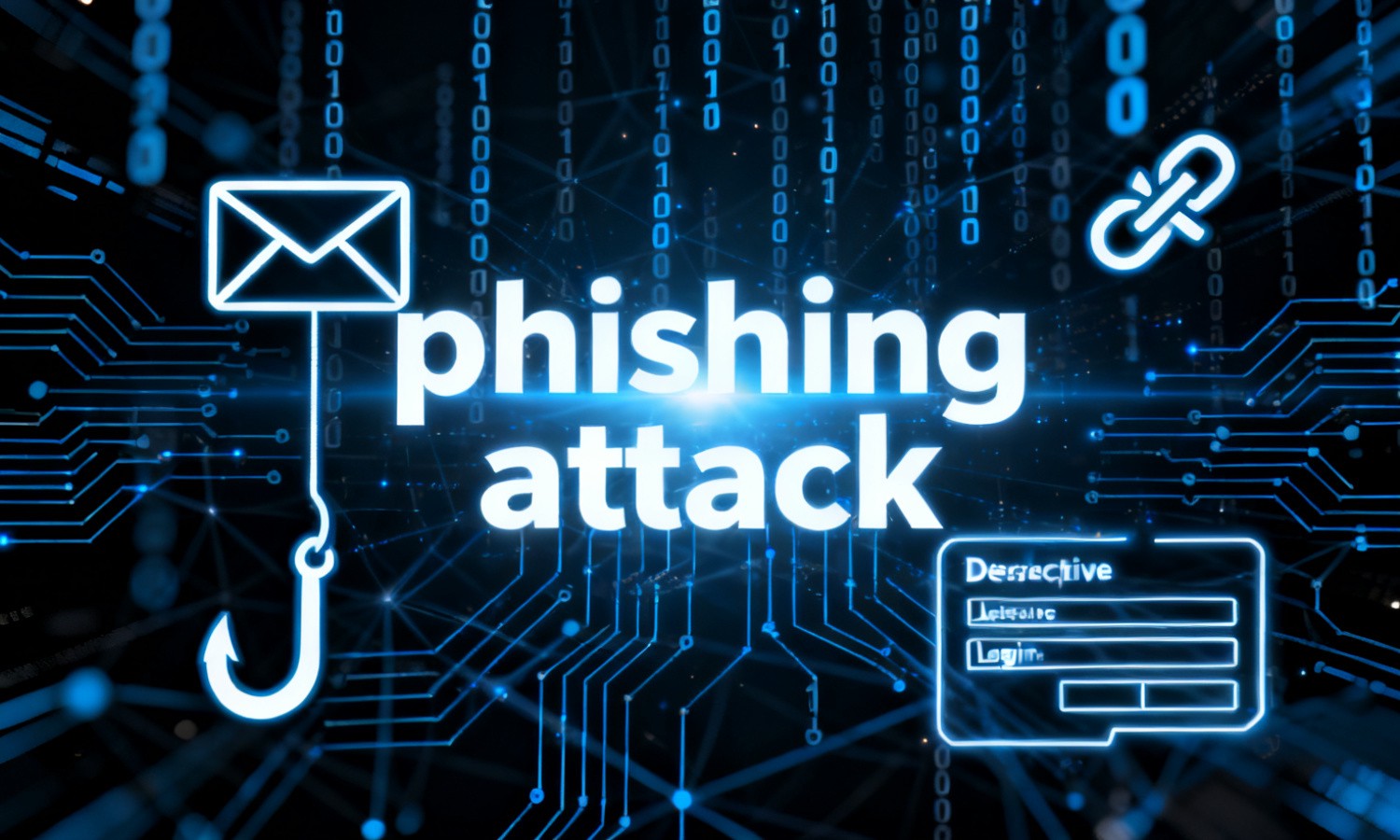
at the moment when digital office and life are highly popularized, cyber security threats are penetrating into daily scenarios in various forms. Among them, phishing attacks have become the first choice for many hackers due to their low cost and high success rate. It will not only steal personal account passwords and bank card information, but also may bring serious consequences such as core data leakage and huge property losses to enterprises. This article will deeply dissect the essence of phishing network attacks, sort out common attack types, analyze their hazards, and give targeted defense suggestions to help readers establish effective security protection barriers.
What is the core nature of phishing attacks?
to effectively prevent phishing attacks, we must first clarify its core definition and operation logic, and understand the characteristics of such threats from the root.
1, camouflage is the core feature
phishing attack is essentially a kind of social engineering attack, hackers will disguise as a credible institution or individual, such as banks, e-commerce platforms, company HR, etc., through counterfeit emails, text messages, websites and other carriers, to induce victims to actively disclose sensitive information, or perform malicious operations. This camouflage is usually highly realistic, and it is difficult for ordinary users to identify the authenticity by intuitive judgment alone.
2, inducement is the key means
The core operating logic ofphishing network attack is to take advantage of the user's psychological weaknesses, such as fear of property damage, greed for welfare benefits, obedience to work instructions, etc., to design a seductive scene. For example, send an email "account abnormality needs to be verified", or a text message "limited time coupon collection", so that users can ignore the details and operate directly in a nervous or excited mood.
What are the common types of phishing attacks?
with the development of technology, the types of phishing attacks are also evolving, different types of attacks for different scenarios and client base, have their own mode of operation.
1, email phishing attacks
this is the most common type of phishing attack, hackers will send phishing official emails in batches, often with the words "Urgent Notification" "Account Freeze Warning" in the title, and the content contains fake login links or attachments. Once the user clicks the link to enter the account password, or opens the attachment with a virus, the information will be stolen by hackers, or the device will be implanted with malicious programs.
2, SMS phishing attacks
this type of attack is also known as "SMS phishing". Hackers send counterfeit official text messages through fake base stations or SMS platforms. The content involves express pickup, bank card consumption reminders, verification code exchange, etc. The attached short URL usually points to the counterfeit website. After the user clicks the link, if he enters the mobile phone number, verification code and other information, he will fall into the trap of hackers.
3, voice phishing attacks
voice phishing network attacks are mainly carried out by phone, hackers will disguise themselves as customer service, public security, bank staff, etc., to intimidate users for reasons such as abnormal accounts and suspected violations, and induce them to disclose sensitive information such as bank card numbers, passwords, and verification codes through the phone.
What are the actual harms caused by phishing network attacks?
the harm of phishing attacks far beyond the imagination of ordinary users, not only will affect the personal property security, but also the development of business operations will cause a fatal blow.
1, personal level property and information loss
for individual users, phishing attacks, the most direct loss is the theft of property, hackers may be directly transferred through the stolen bank card information consumption, or use the account password to steal the balance of various platforms. In addition, personal identity information, address book, photos and other privacy data may also be leaked, and then encounter precision fraud or malicious harassment.
2, operational and reputational crisis at the corporate level
phishing attacks against enterprises are often well-targeted, and hackers will disguise themselves as partners or company management to induce employees to disclose core business data, customer information, or execute transfer instructions. Once the attack is successful, enterprises will not only face huge property losses, but also lose customer trust due to core data leakage, triggering a serious reputation crisis, and even causing enterprises to fall into operational difficulties.
four, how to effectively prevent phishing attacks?
understand the nature, type and harm of phishing network attacks, master effective prevention methods, in order to truly reduce the risk of attacks.
1, enhance personal safety awareness
individual users should always be vigilant, do not easily believe in unfamiliar emails, text messages, emergency notifications or preferential information on the phone, when encountering requirements involving account verification, transfer, sensitive information filling, to verify the authenticity through official channels. At the same time, to regularly update the password, open the two-factor authentication function, improve the security level of the account itself.
2, enterprises establish a protection system
enterprises need to build a sound cyber security protection system, deploy email filtering, web page tamper prevention, intrusion detection and other technical equipment to intercept the carrier of phishing network attacks. In addition, it is necessary to regularly organize employees to carry out cyber security training, simulate phishing attack scenarios to improve employees' identification ability, and establish strict financial approval and data access processes to reduce the risk of attacks from the institutional level.
sum up, phishing attacks are a strong camouflage and wide range of cyber security threats, the core of which is to obtain sensitive information of users through camouflage and induction. Whether it is an individual or an enterprise, it is necessary to clarify the common types of such attacks, understand the property and reputation losses they may cause, and start from the level of awareness improvement, technical protection, system norms, etc., to establish a comprehensive security protection system, in order to effectively avoid the risks caused by phishing network attacks and protect their own cyber security.